
Ad astra in retro
Author: EIS Release Date: Jul 18, 2019
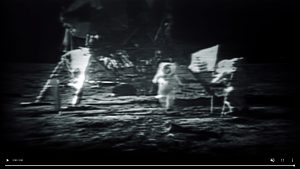
Millions witnessed the moon landing in July 1969. Caroline Hayes looks at space technology then and in the 21st century.
Six years after he opened the Labour Party conference with his rousing “white heat of technology” speech, Harold Wilson was prime minister of the UK and Neil Armstrong and Edwin (Buzz) Aldrin walked on the moon. Prince Charles had just been invested as Prince of Wales, Patrick Troughton was Dr Who and the Rolling Stones were at number one with Honky Tonk Women.
In 1962 President Kennedy had declared the objective for a crew to perform a lunar landing, conduct scientific exploration, photograph the terrain of the moon, collect surface materials (moon dust) and transmit TV signals to Earth before their return.
The space mission
Apollo 11 was launched by the Saturn V rocket on 16 July 1969, with Armstrong, Aldrin and Michael Collins on-board. Two hours and 44 minutes after launch, Apollo 11 reached the Earth’s orbit and its engines reignited for nearly six minutes to propel Apollo 11 into a trans-lunar orbit.
The command and service module (CSM Columbia) separated from the spacecraft lunar adapter which contained the lunar module (LM Eagle) that would be piloted by Aldrin.
The two-part lunar module was made up of the descent and ascent stages. It weighed 16 tons and was around 7m long and 10m wide but was not designed to withstand travelling through the Earth’s atmosphere if, for any reason, it did not return to Columbia.
Its on-board guidance and navigation computer triggered the firing of the 9,870-lb (around 4,500 kg) descent rocket that would slow down the module and send it towards the moon on a long, curved, trajectory. It was this module, whose safe landing on the surface of the moon after a three-day flight would prompt Aldrin to utter his first words from the moon: “The Eagle has landed”.
Images were transmitted back to Earth as the command and service module, docked to the lunar module, navigated its way behind the moon. On Sunday 20 July (3.56am on 21 July in the UK), the Eagle separated from Columbia and fired its descent engines for over 12 minutes and landed in the Sea of Tranquility.
The landing was about four miles away from the planned touchdown area. The Apollo Guidance computer was directing it to land on a large crater so the final stages had to be partly manoeuvred manually by Armstrong.
The astronauts were supposed to rest for four hours but, understandably, they were keen to press on and within four hours Armstrong was out of the module and on the surface of the moon. Aldrin followed and set up a camera and tripod about 30m from Eagle. The two spoke to President Nixon via a telephone link.
The astronauts gathered surface samples of the “very fine-grained powder” underfoot and photographed what Armstrong described as its “magnificent desolation”.
Armstrong spent more than two hours on the surface of the moon and Aldrin re-entered the Eagle 40 minutes earlier. In total they spent 21 hours and 36 minutes on the moon, before the ascent engine was fired to launch Eagle into the moon’s orbit and they rejoined Collins on the Columbia.
The crew returned to Earth, splashing down in the Pacific Ocean, near Hawaii, on 24 July. They were picked up by HSS Hornet, where they were kept in quarantine for three weeks, in case they had brought back any “alien organisms”.
Computing power
All of this was achieved following earlier Apollo and Gemini manned space missions and using the most advanced computers of the age.
The Apollo Guidance computer had been designed at the Massachusetts Institute of Technology (MIT) Instrumentation Laboratory and its software has been described as forming the basis for modern computing.
The operating system used a hierarchical structure with the important programs receiving attention as a priority. Hardware was controlled with machine code instructions, typed in by the crew.
The memory capacity was 64kbyte and operating speed was just 0.043MHz. Although this would be seen as derisory today, with even games consoles like the X-box One having 8Gbyte of RAM, the computers were responsible for driving the rocket engine and controlling jets to land the lunar module.
Most importantly, it was designed to be crash-proof and did not malfunction once, although when the crew forgot to turn off the auxillary radar, critical warning lights flashed.
At the Nasa Goddard Space Flight Center in Maryland, flight technicians and computer experts used the IBM System/360 Model 75s mainframe computer for computation and communication with the lunar modules. Each cost $3.5m and could perform several hundred thousand operations per second; today, an iPhone 6 can execute 3.36bn instructions per second.
After the exuberance of the US moon landing, there were six more missions sending 10 astronauts into space. The entire Apollo programme, including manned and unmanned missions and six moon landings, cost $25bn (around $145bn today). The final mission was Apollo 17 in December 1972.
In 1984 US president Ronald Reagan instructed Nasa to build a space station – the first component of which was launched in 1998. The Russian space station, Mir, had been operational since 1986 (it was abandoned in 2000 and de-orbited in 2001).
By the end of the millennium the US space station had become an international effort, with engineering collaboration from 15 countries including Russia. It is still permanently inhabited by international crews of astronauts, and for a time was serviced by regular visits from the US Space Shuttle.
The US space programme was halted in 1986, following the Challenger launch, when the space shuttle broke apart seconds after lift‑off, killing everyone on-board. The programme later resumed, but in 2003 Space Shuttle Columbia disintegrated on re-entry to the atmosphere, killing all seven crew members. Since the last shuttle was decommissioned in 2011 Russian rockets have supplied the ISS.
Today’s space race
In 2004 US president George Bush announced that astronauts would go to the moon in 2020, on their way to further journeys into space.
In the 21st century, individuals are collaborating with Nasa for space missions beyond the moon – adventurers have Mars in their sights. Nasa’s Artemis programme was announced in May.
Nasa wants to extract the millions of tons of ice under the moon’s surface and convert it into drinking water or oxygen, or separate it from hydrogen for use as rocket fuel, reported news channel, CBS. Artemis intends to send astronauts to the moon, propelling heavier payloads for longer stays in space.
It will also carry the first female to walk on the moon, and establish a permanent base there for human missions to Mars. Originally, astronauts were military pilots and so exclusively men, although later about one third of the space shuttle programme astronauts were women. Sally Ride was the first woman to go into space in the seventh Space Shuttle mission in 1983.
In Greek mythology, Artemis is Apollo’s twin sister and goddess of the moon. USA Today reported that Nasa administrator, Jim Bridenstine, wants the project to showcase the contribution of women to the space programme.
“We have this diverse astronaut corps where we can actually send the first woman to the moon and name it after the twin sister of Apollo,” he explained. “I have been trying to communicate… to as many people who will listen that we are not the Artemis generation [yet],” said Bridenstine.
Artemis’s maiden flight is planned for 2020, using the same premise as the Apollo moon landings, a capsule on top of a rocket, but magnified for the 21st century.
The Space Launch System is a rocket that will blast the Orion unmanned crew capsule to the moon and back. In 2022 the project will have four astronauts on-board and there are plans to build a small space station to orbit the moon and dock a lunar lander.
In 2024, the Orion capsule will take four astronauts to the station, who will board the lander and descend to the moon’s surface. A small spaceship, Gateway, will orbit the moon for easier access to and from Earth.
Already Artemis has cost over $21bn and Nasa has asked for an additional $1.6bn.
Space tourism
Civilians are reaching for the stars too. Elon Musk has launched SpaceX’s Falcon Heavy rocket, with a maiden voyage in 2018 and subsequent launches in April and June this year. The reuseable launch vehicle has three commercial missions scheduled and is ahead of its nearest competition, the European Space Agency’s Ariane 6 launch vehicle, which has its maiden test flight scheduled for 2021.
Musk is also concentrating on the Crew Dragon capsule which can carry four people and two Nasa astronauts to space later this year. He has plans for another project, Starship, conducting brief test flights within the Earth’s atmosphere in preparation for a flight around the moon in 2023.
Richard Branson’s Virgin Galactic plans to send the USS Unity Spaceliner into space this year for commercial flights at a cost of $250,000 per seat.
The thrill for adventurers of travelling to space appears undaunted, despite past setbacks and a seeming victory in the race to the moon.
Mankind’s quest for knowledge and understanding beyond this planet show both a continuing zeal to explore and discover and also the huge progress that technology has made in a short space of time.